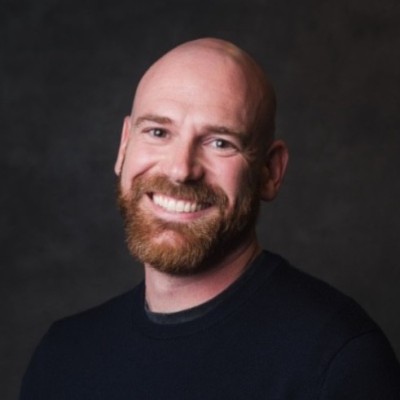
Alen Sevšek · Science to Product to Adoption
READING DEPTH
SCIENCE PRODUCT ADOPTION

Alen Sevšek

PhD MEDICINAL CHEMISTRY / DRUG INNOVATION · UTRECHT, NL

I bridge science, product, and go‑to‑market.

A decade translating science into adoption taught me that trust is the actual product. This site sits beside my CV: things I have built, a business I co‑run in AI, and the questions I keep coming back to.

Part portfolio, part field note, and a little of the life around the work, with a preference for the honest version over the polished one.

Scroll
About
Chemist by training, commercial by career, builder by choice.

I was trained as a medicinal chemist, which is a long education in one question: is this claim actually true? Commercial work since 2017 has taken biosensing, contract research, and IoT software into markets where a wrong claim costs more than a lost deal. I now build my own products with AI, and the question has not changed.

I work in a specific order: understand the domain first, structure early, then let the market talk back. I would rather ship a smaller thing that is trusted completely than a larger thing trusted conditionally. When I say a system is independent, I want that enforced in code, not stated in a policy. When I say a work is real, I mean it was captured, not rendered.

What I value is unglamorous: precision, independence, and tools that let the person relying on them stay in charge.

What I Bring
Cross‑Functional Translation 0→1 Commercial Build Regulated‑Market Experience Technical Depth
Where I'm Sharpening
·
I default to building the process myself before delegating it, an asset at 0→1 and a thing to watch as teams scale.
·
I over‑verify: I will check a claim twice before moving, a habit from the lab that costs speed and buys reliability.
Experience
Utrecht University
ENVIŽN
KEI
SPR Instruments
Lipid Knowledge
AUTOMEJŠN
th[is] B.V.
IoT Exchange
References

A PhD supervisor, a CEO who has hired and led scientists, and the managing director of a software firm. Each links to the full letter.

Doctoral supervisor · scientific rigour and interdisciplinary synthesis
“Alen's ability to recognize patterns, translate complexity, and synthesize across disciplines were, and continue to be, key contributors to his success both inside and outside the lab. … It is with the highest confidence that I recommend Alen for senior product strategy and commercial leadership roles in the life sciences and technology fields.”
Prof. Nathaniel Martin · PhD supervisor, Utrecht · now Leiden University
On LinkedIn ↗
CEO and diagnostics founder · international commercial work and building a CRO
“I am hiring people for past 20 years … and have seen many young professionals come and go. Dr. Alen Sevšek stands out.”
Dr. J.T. Castrop · CEO & Director · KEI · TBCertain · Lipid Knowledge
Full letter ↗
Software‑firm managing director · commercial leadership within a software firm
“What stands out most about Alen is his ability to bring people together. He works closely with different teams, listens carefully, and helps turn the company's vision into a realistic and practical strategy. Alen doesn't just think about the future, he takes action and follows through.”
Jannemiek Korssen‑Remmers · Managing Director · this.nl
Full letter ↗

Doctoral Research

PH.D. MEDICINAL CHEMISTRY · UTRECHT UNIVERSITY
Guanidinium Iminosugars as Glycosidase Inhibitors

A new class of guanidinium iminosugars built to inhibit glycosidases with a selectivity natural‑product inhibitors rarely achieve. Three first‑author papers. Selective versus merely potent is the thread through everything I have built since.
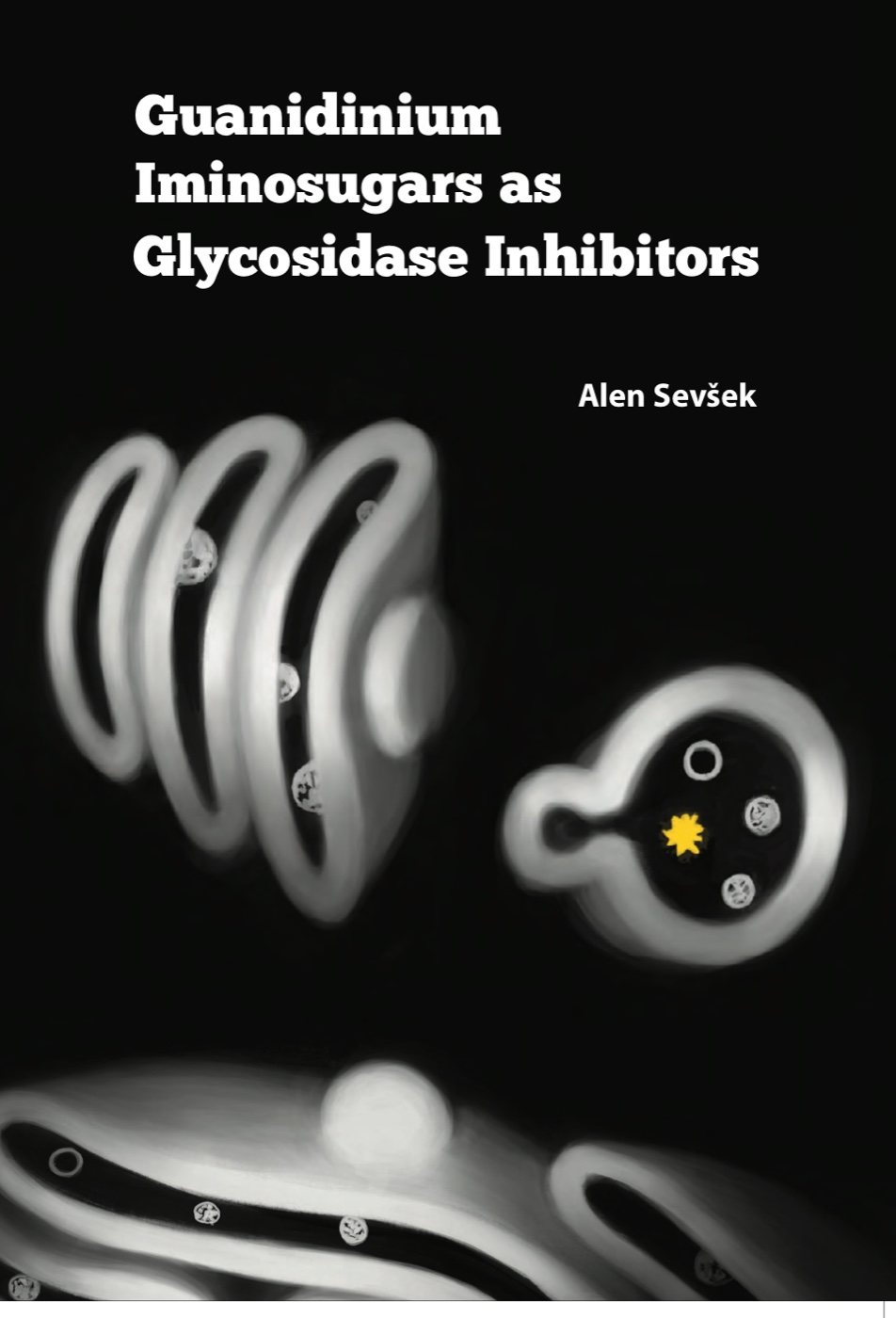
Thesis cover
Open thesis · PDF ↓
Selected Publications
Orthoester functionalized N-guanidino derivatives of 1,5-dideoxy-1,5-imino-D-xylitol as pH‑responsive inhibitors of β-glucocerebrosidase.
MedChemComm, 2017 · DOI ↗
N-Guanidino Derivatives of 1,5-Dideoxy-1,5-imino-D-xylitol are Potent, Selective, and Stable Inhibitors of β-glucocerebrosidase.
ChemMedChem, 2017 · DOI ↗
Bicyclic isoureas derived from 1-deoxynojirimycin are potent inhibitors of β-glucocerebrosidase.
Organic & Biomolecular Chemistry, 2016 · DOI ↗
PH.D. MEDICINAL CHEMISTRY · UTRECHT UNIVERSITY
Guanidinium Iminosugars as Glycosidase Inhibitors

Glycosidases sit at the center of how cells process sugars: when they fail, disease follows. My doctoral work designed and synthesized a new class of guanidinium‑bearing iminosugars, chemical tools built to inhibit these enzymes with a selectivity that natural‑product inhibitors rarely achieve.
Why it matters: selective inhibition is what separates a drug candidate from a laboratory curiosity. A molecule that cannot distinguish between related enzymes cannot be dosed safely. That distinction, selective versus merely potent, is the thread connecting this doctoral work to everything I have built since.

Designed and synthesized a novel guanidinium‑modified iminosugar scaffold with improved glycosidase selectivity over classical inhibitors.
Established structure‑activity relationships across a series of synthesized analogues, published across three first‑author papers.
Elected PhD Representative, Utrecht Institute for Pharmaceutical Sciences, representing doctoral researchers to faculty leadership.
Selected Publications
Orthoester functionalized N-guanidino derivatives of 1,5-dideoxy-1,5-imino-D-xylitol as pH‑responsive inhibitors of β-glucocerebrosidase.
MedChemComm, 2017 · DOI ↗
N-Guanidino Derivatives of 1,5-Dideoxy-1,5-imino-D-xylitol are Potent, Selective, and Stable Inhibitors of β-glucocerebrosidase.
ChemMedChem, 2017 · DOI ↗
Bicyclic isoureas derived from 1-deoxynojirimycin are potent inhibitors of β-glucocerebrosidase.
Organic & Biomolecular Chemistry, 2016 · DOI ↗
Thesis cover
The full dissertation, open access via Utrecht University.
Open full thesis · PDF ↓
What I Build
Products I built and a business I co‑run on AI. Each one was also how I learned to build: the standard stays the same, the domain changes. The part a CV cannot show.
SupplementPeer — supplementpeer.com
DEMO MODE · BACKEND IN PROGRESS

SupplementPeer

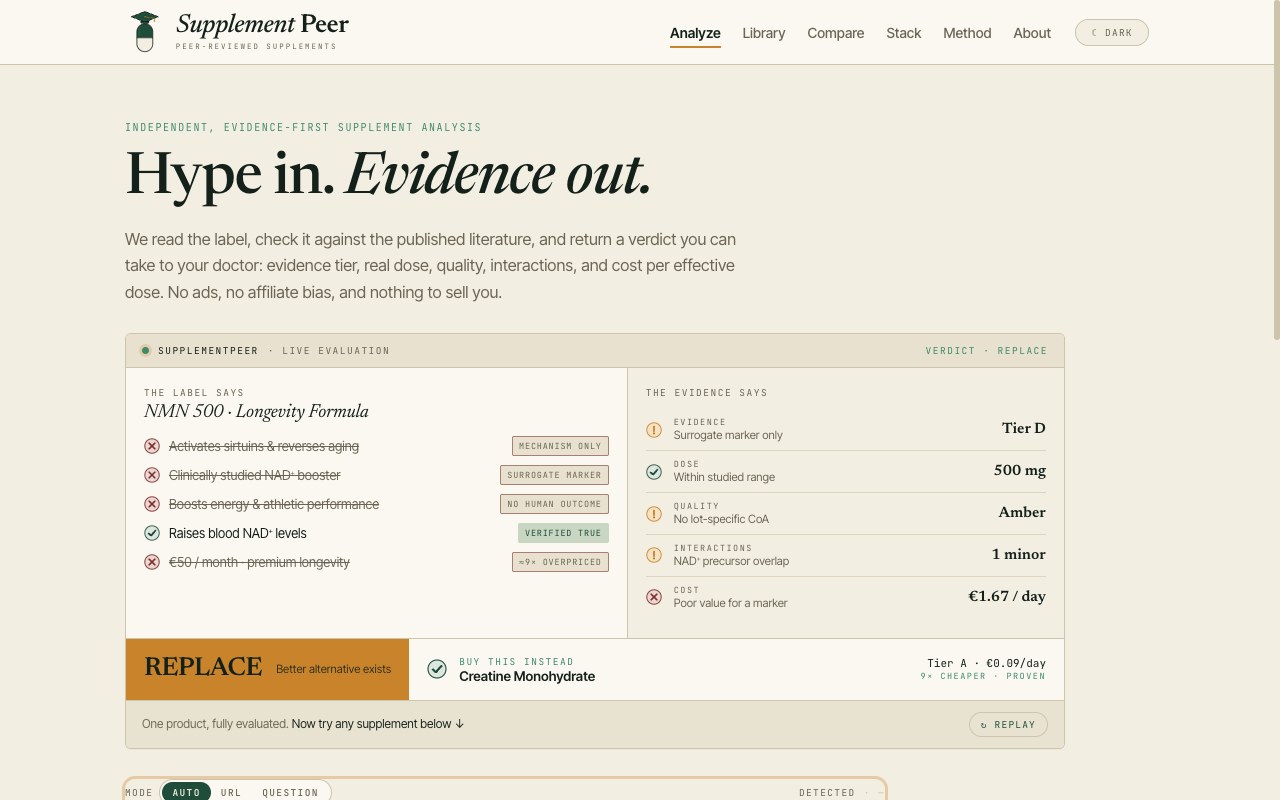
A reusable evidence‑verification pipeline, shown on the supplement shelf: retrieve, bind every claim to a source, validate, decide. A working demo on sample data.
supplementpeer.com
LoreTrip — loretrip.com
BUILT · PRE‑MARKET · DEMO MODE

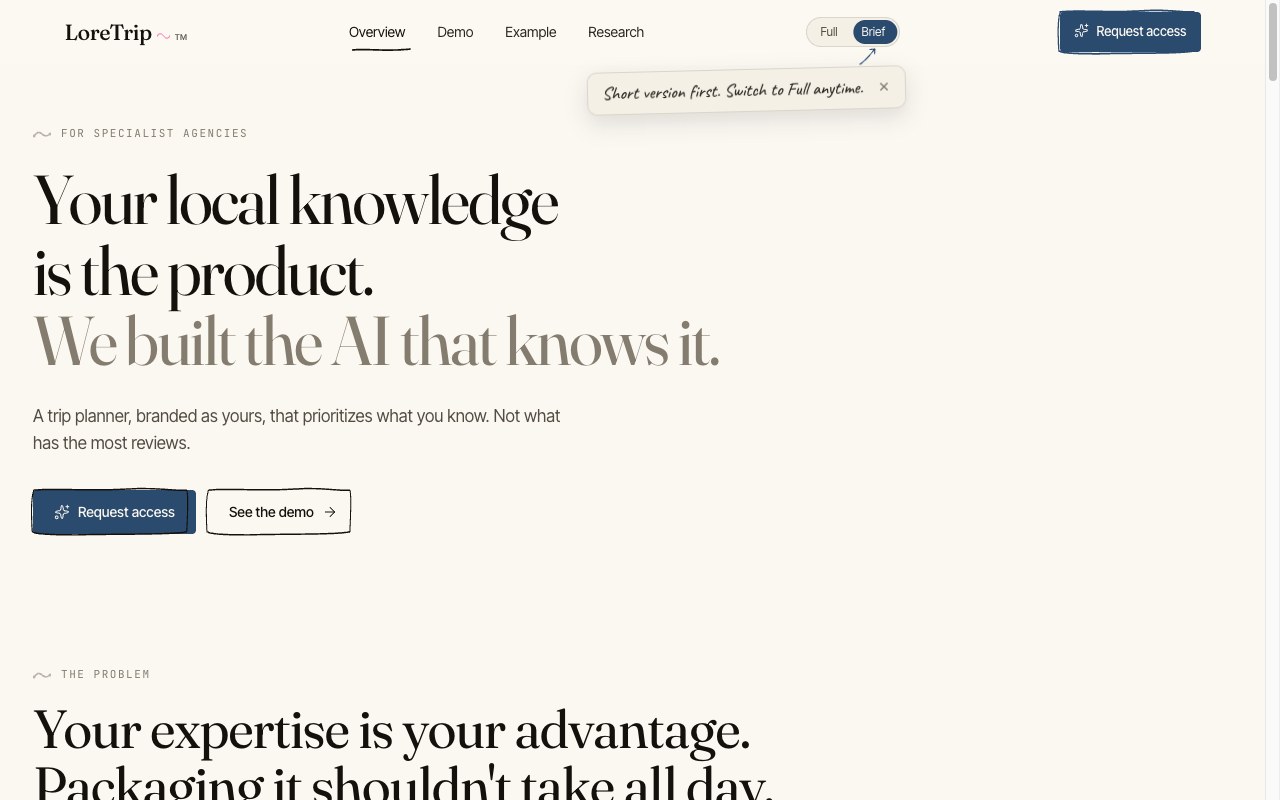
LoreTrip

White‑label AI planning for specialist travel agencies: the agency's curated knowledge becomes the planner's first preference, not the internet's consensus.
loretrip.com
Mijn Slovenië — mijnslovenie.com
LIVE BUSINESS · RUN ON AI

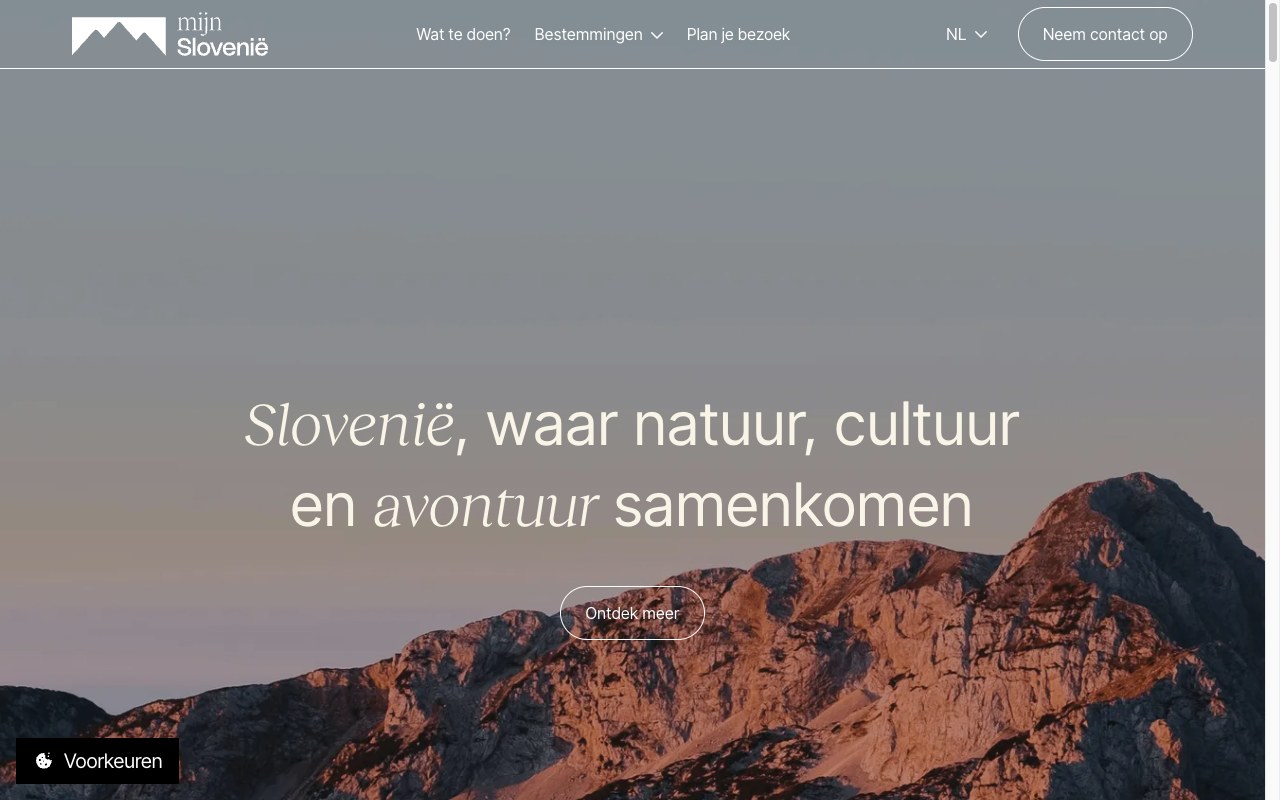
Mijn Slovenië

A Dutch travel business originally built by Povio, today operated through AI workflows I orchestrate together with a partner: content, planning, and back office kept moving.
mijnslovenie.com
V Á K U U M — vakuum.art
ART PRACTICE · SINCE 2021

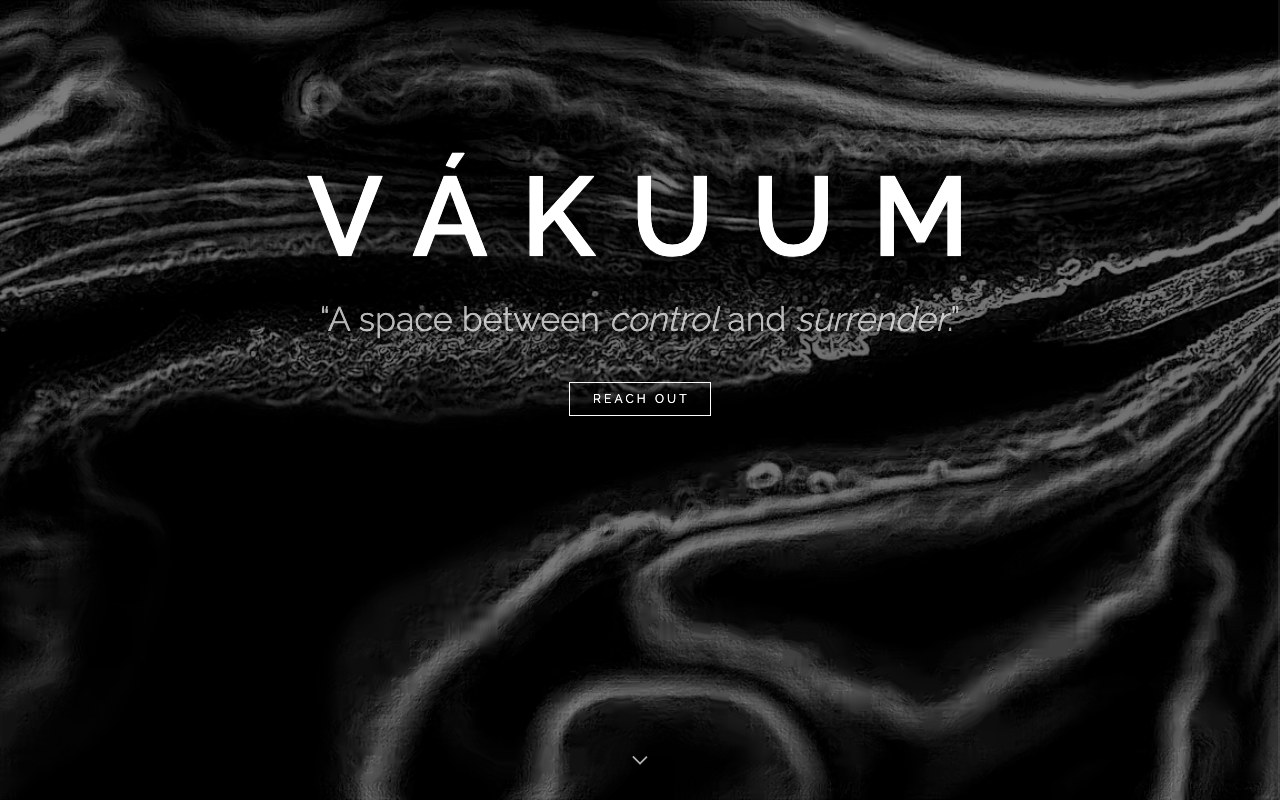
V Á K U U M

Where a scientist proves art and science are one act. Real acrylic on tiles, captured in‑camera at macro scale, then re‑read in digital and audiovisual series; 100+ works.
vakuum.art
Each project has a longer version: the problem it solves, the architecture, and what runs today versus what does not.
SupplementPeer — supplementpeer.com
The pipeline, domain‑agnostic
Supplements are the example
Retrieve
literature · labels · certificates of analysis
Provenance
DOI · PMID · source binding
Validate
dose · interactions · coherence
Repair
bounded · provenance‑grounded Designed · gated
Decision
keep · replace · drop — fails closed

The domain is the example. The pipeline is the point: the same shape tested trading strategies at AUTOMEJŠN and guards recommendations in LoreTrip.

Distinctive Detail

The independence is compiled in, not just declared: the code will not build if rating logic imports commercial logic, so the firewall between evaluation and any future commerce is a property of the system rather than a promise.

PROJECT 01 · DEMO MODE · BACKEND IN PROGRESS

SupplementPeer

A reusable evidence‑verification pipeline, demonstrated on the supplement shelf: retrieval, provenance binding, validation, and a decision that has to survive its own citations. Currently a working demo on sample data.

The industry profits from a blind spot. A shopper can compare prices, but not the things that decide whether a product works: whether the compound has clinical evidence or only a moved lab marker, whether one dose actually reaches the studied range, whether the form is absorbable, what it competes with in the liver, and what the same outcome costs from a cheaper product nobody markets. Judging that needs a background most people do not have, so the decision defaults to packaging and price. Only a handful of independent sources try to close that gap, and none put products side by side on dose, form, and cost per effective dose.

SupplementPeer is that comparison, run as a pipeline rather than a chat. Each stage is fixed in advance: what to retrieve, which sources count, what must be checked, and what would overturn the conclusion. The model executes the steps; the method decides them, which is the difference between research and a fluent answer that agrees with whatever you hoped to hear. Evidence is graded A to F, doses are checked against human trials, interactions are screened for absorption and enzyme competition, and cost is normalised to the real price per effective daily dose, then benchmarked against the market. A verdict is KEEP, REPLACE, or DROP, and every claim carries its citation.

The demo's NMN verdict is the shape of it. The compound reliably raises NAD+, which is a surrogate marker, and a decade of human trials shows no consistent clinical payoff, at roughly seventeen times the category cost of an alternative with replicated effects. Tier D. Replace.

What runs today: the full evaluation experience, walkable end to end on sample data, built on the Claude API with a structured retrieval pipeline over named, checkable sources. Next: the live data pipeline and authentication on Supabase, and the repair layer, implemented behind feature gates and deliberately inactive in the demo, which performs only bounded, provenance‑grounded corrections before a verdict is allowed to stand.

Money cannot reach a grade. The rating side is built with no access to commercial data, eligibility flows one way from grade to listing and never back, nothing buys entry or position, and a product that loses its grade is removed regardless of the revenue attached to it.

Visit supplementpeer.com
LoreTrip — loretrip.com
Distinctive Detail

The multi‑tenant model runs from a single build: a generic assistant persona for the base product and a fully separate, tenant‑specific persona and skin per client, so the same platform presents as a different brand's own tool from one codebase.

PROJECT 02 · BUILT · PRE‑MARKET · DEMO MODE

LoreTrip

A white‑label planning platform for specialist travel agencies: the agency's curated knowledge becomes the AI's first preference, so the output carries the agency's taste instead of the internet's consensus. Built on Claude.

AI trip planning is saturated, and nearly all of it draws on the same pool: aggregated reviews, sponsored listings, SEO content. Destinations converge on one itinerary, and a genuinely good local place loses to a larger one with more reviews. The agencies who know their country hold the knowledge that would fix this, and spend their days retyping it one email at a time.

LoreTrip inverts the priority. The agency curates the partners and places it will vouch for, with priority levels, notes, and seasonal relevance, and that layer becomes what the planner reaches for first. Travellers can still extend and swap, but every alternative comes from the same vouched pool, so customisation never drifts into generic. Where the agency has curated nothing, the planner falls back to named public sources and continues rather than stalling. The advisor can lock any element, and nothing reaches a client unsigned.

The reason to ask a local where to eat is not that they hold more data. It is that they hold judgment, and an aggregate score is precisely what destroys judgment. LoreTrip is an attempt to carry judgment through automation instead of averaging it away.

Three layers work today: the agency workspace, the agency‑controlled partner layer, and the platform layer handling agency billing. The reference build runs as a fully interactive experience, with a branded assistant, animated maps, a packaged itinerary screen, and a generated PDF trip guide, and the product is registered in the Anthropic Claude Partner Network. Current work is the white‑label tenancy itself, done slowly on purpose: tenant isolation, EU‑region hosting, and GDPR data‑processing terms have to be right before a second agency exists, let alone a tenth. Mijn Slovenië is the deliberate first tenant, monitored for usage, cost, and feedback, to stress the multi‑agency layer against one real business before expanding.

Visit loretrip.com
Mijn Slovenië — mijnslovenie.com
Distinctive Detail

LoreTrip will land here as the site's “Plan your trip” section, presented under the Mijn Slovenië brand, once it clears the security and privacy audit for deployment.

PROJECT 03 · LIVE BUSINESS · RUN ON AI

Mijn Slovenië

A live Dutch travel brand for trips to Slovenia, and LoreTrip's reference tenant, whose day‑to‑day operations run on an AI operating system.

Povio originally built the site; the more interesting part is how the business runs today. Mijn Slovenië operates as an AI‑orchestrated business: an AI operating system handles the recurring work: social content, first‑line customer questions, trip planning and destination research, competitor tracking, and the back office, all inside a defined brand voice. My partner and I direct and review rather than do each step by hand, and nothing reaches a customer without a human approving it. I co‑run it as Founder & Creative Director.

It is also where I learned orchestration properly. The hard part of a system like this is not prompting; it is architecture: a hierarchy of instruction files that behave like departments, each scoped narrowly enough to stay coherent, so context does not bloat and the model does not drift into invention. I run it myself rather than delegating it, because that hierarchy is the difference between a chat that impresses once and an ecosystem that still works in six months.

AI earns its place when it keeps a real operation moving and extends a person's judgment, not when it only demos. The business is the test: instead of claiming AI can run operations, we run one on it, and keep a human in charge of what actually reaches a customer.

Visit mijnslovenie.com
V Á K U U M — vakuum.art
The same standard as the products

Everything begins in‑camera from real physical processes: no simulation, no CGI, no generated imagery. What follows is post‑processing, and the work says so. The abstraction is not designed; it emerges. In a time of cheap generated imagery, stating exactly what a thing is and how it was made is the same discipline that runs through everything I build: the claim matches the artifact.

PROJECT 04 · ART PRACTICE · SINCE 2021

V Á K U U M

“A space between control and surrender.”
A scientist's discipline and an artist's are the same act: staying inside the question long enough for something true to surface.

It started with paint: dilution, gravity, control. It changed the moment I stopped trying to reproduce a master and started listening to what the material was doing. V Á K U U M records real physical processes as they bleed, dry, and settle, then treats that footage as compositional material. Not scientific documentation; the same attention to how matter behaves that governs lab work, turned toward what it looks like up close.

The work moves in three stages, and the movement is the point. Acrylic on physical tiles first, poured and flooded and left to decide its own final form, because drying is only a verdict, not an ending. Then digital re‑readings of the same source. Then the audiovisual series, which gives the motion back the time a still image takes away. Made over several years, each piece records a process that happens once and cannot be repeated, and more than 100 works across the three series now share one visual language.

It also asked, early, the question the rest of the field is asking now: if a work is shaped with something autonomous, is it still human? I think yes. A person steering the machine has not stopped travelling; they may simply reach places they could not have walked to alone.

Visit vakuum.art
How I Build

I am a domain expert who ships software, not a career developer. I design the product, set the architecture, and direct Claude Code and Claude Design as the execution layer: they write most of the code, I read it, question it, and decide what ships. The judgment about what to build, what is safe to rely on, and what is honest to claim stays with me.

The method is visible in the work: a Postgres design where rating data and commerce data live in separate schemas, and the build fails if rating code imports commerce code, with unit and end‑to‑end tests in CI enforcing that boundary, a headless‑Chrome PDF pipeline, MCP connectors, and a multi‑tenant white‑label architecture that re‑skins one codebase per client. I did not hand‑write all of it. The architecture is mine: the schema design, the enforced boundary between rating and commerce logic, the test strategy, the tenancy model. I read what ships, and I reject what I cannot justify. The same shape recurs across the work: retrieve, bind every claim to a source, validate, decide, and choose in advance how the thing should fail. The domain changes; the architecture does not.

BUILD STACK
{{ tc.label }}
Career Snapshot
{{ snapshotIntro }}
Now
Independent — Founder & Builder, Applied AI
Going deep on AI engineering and product building, learning to ship production systems end to end, reinforced by executive education at Harvard Business School Online.
2026 – present
th[is] B.V. — Head of Sales & Innovation
First strategic commercial hire at a 40‑person software company. Authored the three‑year roadmap. In parallel, held a separate Sales & Strategy Executive function for the IoT Exchange project, carrying it from vision to market readiness.
Why the move into software was deliberate

From 2023 I had been noticing that the way I formed judgments at the bench seemed transferable, and I wanted to test two things: whether that translated into software, and whether opportunity recognition inside my own domain would work in one I did not know.

I took a one‑year contract on purpose rather than a permanent role. The alternative on the table was a purely commercial seat, which would not have answered either question. th[is] would: fast‑growing, real customers, and an open question about how to prepare for things going wrong. I spent the year on strategy, risk and commercial structure, working closely with strong engineers, and it settled what I wanted settled, that the gap between a domain expert and an engineering team closes if you learn the tools yourself instead of talking about them. Then I started building.

2024 – 2025
AUTOMEJŠN d.o.o. — Founder & Director
Founded a quantitative‑finance research firm to test whether commercially sold strategies and indicators actually hold up. With a post‑doctoral mathematician I built a Python backtester and multivariable models to separate real dynamics from hoax; a developer handled execution and the server side. Research, with no external customers by design.
2021 – 2024
ENVIŽN — Senior Scientist, Technical Pre‑Sales & Product Owner
My independent consulting vehicle, contracted into Castrop Beheer's diagnostics holding through January 2023 across three early‑stage life‑sciences entities: SPR pre‑sales on four continents, Product Owner, and the commercial function of the Lipid Knowledge CRO spinout, built from nothing.
KEI·SPR Instruments·TBCertain·Lipid Knowledge
Opening the Fujifilm relationship

We were buying kits and chemicals from Wako, part of Fujifilm, for the assay work. What I noticed was a company repositioning itself into life sciences, which meant it would eventually need instruments, and a contact whose own kit sales would grow if that happened, which gave him a reason to carry it upward. Over about two years and four substantive meetings it reached their headquarters and an agreement to show our instrument on their official stand at Messe Düsseldorf. The holding wound up before the show, so nothing was signed beyond that. The prevailing view internally was full independence; I thought a staged partnership was the faster route into both instrumentation and diagnostics.

The external technical relationships

The SPR instrument line originated from Metrohm, and under a continuing arrangement Metrohm routed SPR‑interested customers to us. Technical support was split by domain, biochemistry on our side, electrochemistry on theirs, with joint attendance at customer sites depending on the problem. Jan Castrop ran that relationship himself before handing it over, and I took on onboarding, installation, training, application support and continuity across four continents.

Alongside it I looked after the Scienion relationship in Berlin, travelling twice to deliver, retrieve and train, and taking them to the point of wanting to buy the instrument. I handled antigen supply quality with Surfix in the Netherlands, and translated our SPR assay onto the ForteBio platform as an independent verification method. For those years, the group's external technical relationships largely ran across my desk.

Designing the tuberculosis antigens

I performed the coupling chemistry and the assay development for the SPR technique, later for ForteBio interferometry as well, and took part in the bioassay work the rest of the lab was running. As the antigen design deepened the organic lab took on synthesis and the specialists took the hardest determinations. What I did throughout was sit between the chemists and the biologists. If an organic chemist designs the antigen, the biologist may not be able to use it. If the biologist specifies what they need, the chemist may find it unaffordable, unscalable, unsafe or simply not achievable. Somebody has to hold both and decide. Jan Castrop and I made those calls together, against the literature, what was commercially available, and whether it would scale.

Work ran with a research group and with research hospitals that had their own labs. The samples required were HIV‑positive and legally constrained to obtain, and the assay never reached commercial or regulatory validation. The group was wound down before it could. I would rather state that plainly than let the word “clinical” carry more than it should.

Lipid Knowledge

We had a stock of antigens and precursors that were dead ends for the assay work and would otherwise have been written off. I saw them as an asset that could fund the research still running. I built the commercial side of that from nothing: positioning, brand, pricing, the site and outbound. I prepared the offer for both materials and contract research. It did not reach revenue before the group closed. The recognition is what I would claim here, rather than the result.
2017 – 2024
Utrecht University · UIPS — PhD Researcher & Institutional Representative
Doctorate in medicinal chemistry: three first‑author publications; elected PhD Representative at UIPS.
2013 – 2017
Executive Education
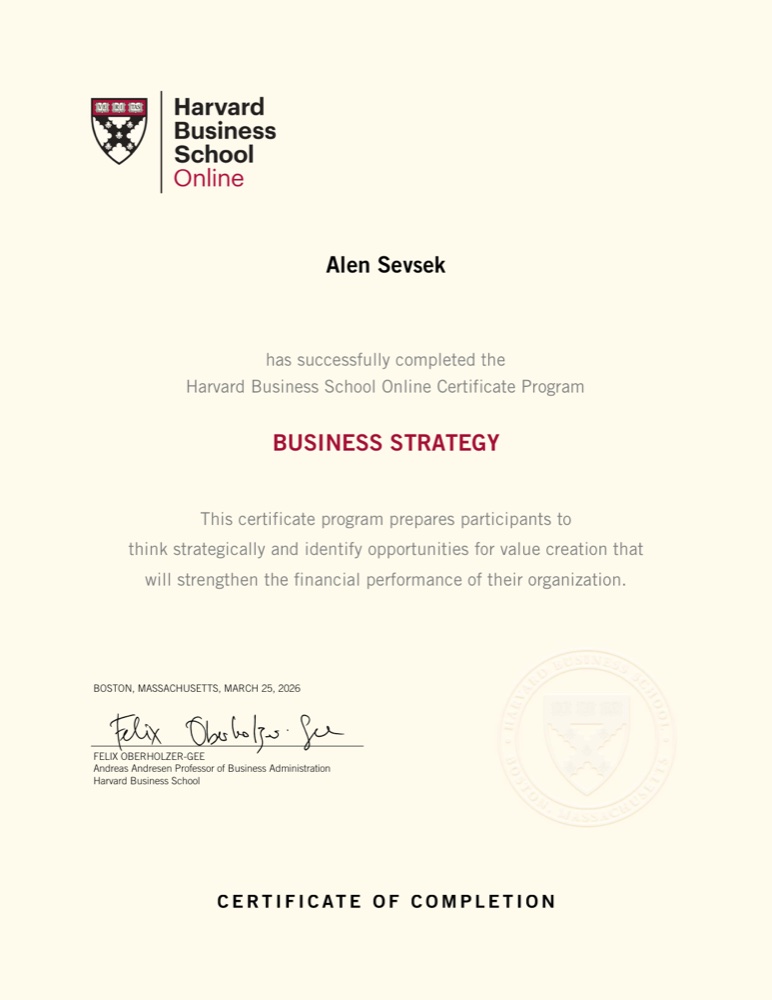
Harvard Business School Online — Business Strategy certificate
Harvard Business School Online
Business Strategy
2026
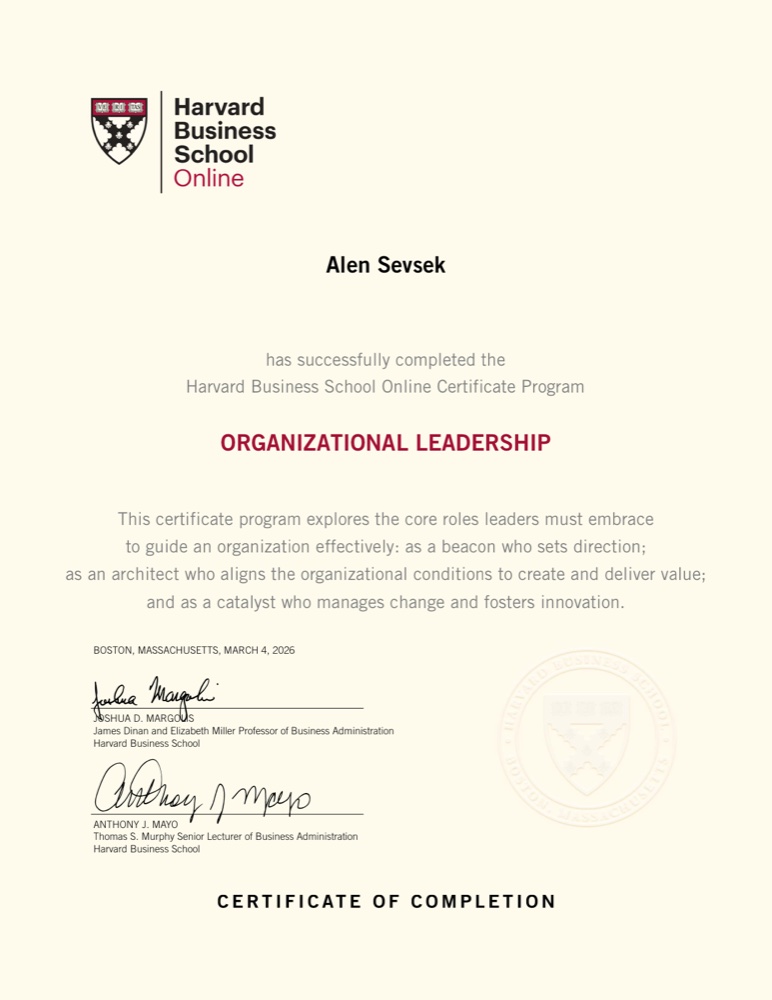
Harvard Business School Online — Organizational Leadership certificate
Harvard Business School Online
Organizational Leadership
2026
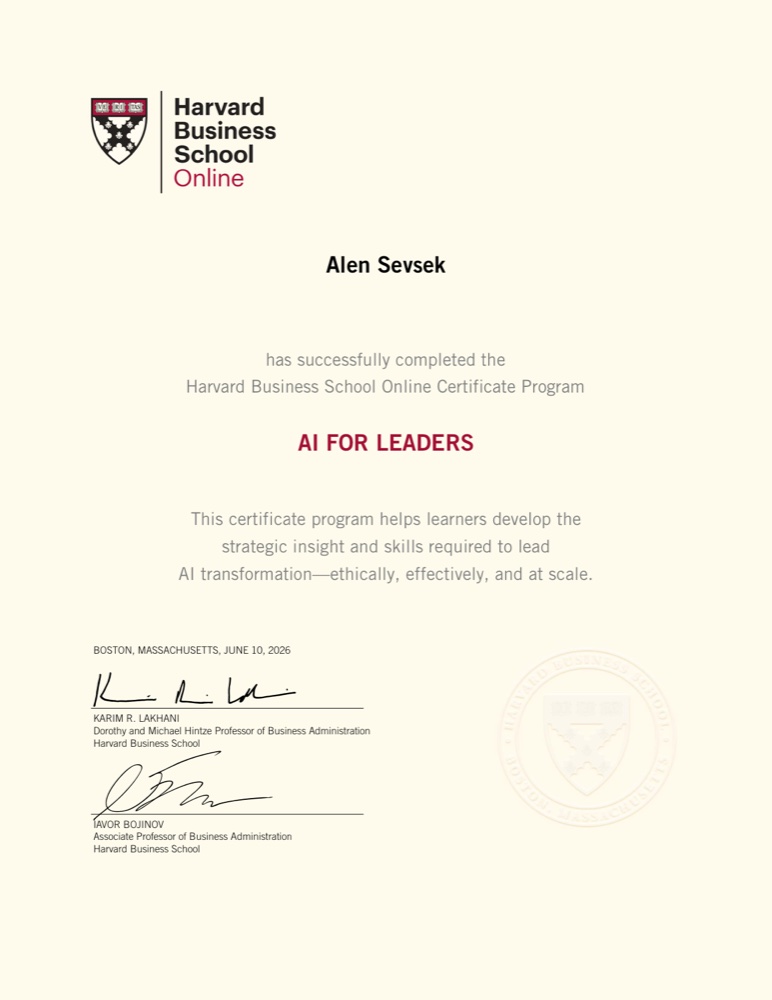
Harvard Business School Online — AI for Leaders certificate
Harvard Business School Online
AI for Leaders
2026
THE RECORD · 2006 → PRESENT

Career Readout

The record below is chronological. As each era enters view it deposits its skills into the ledger, reading by reading; by the last era the whole stack sits together.

One arc: science → product → adoption. Doctoral medicinal chemistry, then taking science to market: SPR biosensing across four continents, product ownership, a CRO built from zero, and the first commercial hire at a 40‑person software company. Now building applied‑AI products end to end. Three executives have put this record on record.

PhD, Utrecht Technical Pre‑Sales · 4 continents Product Owner Head of Sales & Innovation Founder & Builder
2006 → present
{{ ym.label }}
{{ axThreadCaption }}
READ ME AS
{{ llFrameGrowth }}
EVIDENCE
{{ ev.role }}
{{ ev.org }}
{{ ev.period }}
{{ ev.note }}
HONEST NOTE
{{ llFrameHonest }}
{{ llFrameAnnounce }}
{{ era.title }}
{{ era.metaLine }}
{{ era.periodLabel }}
Placeholder · owner to detail

{{ era.summary }}

Certified · {{ era.credIssuer }} {{ era.credYear }}
{{ cr.name }} {{ cr.adds }}
DEPOSITS {{ ch.label }}
Independently witnessed {{ era.witnessBy }}
“{{ era.witnessPhrase }}”
{{ it.title }}
{{ it.note }}
{{ md.caption }}
{{ out.type }} {{ out.title }} {{ out.meta }}
END OF RECORD
CORE CAPABILITIES
{{ cp.label }}
awaiting first reading
{{ g.label }}
{{ c.label }}
Philosophy & Writing
Longer‑form thinking on applied AI, trust, and where domain expertise meets automation.
ESSAY · 2026 · 4 MIN READ

Good AI deployment is judged by who is better off after it ships

Drug development has a standard that sounds obvious and is hard to meet: potency is necessary, but a compound without an acceptable safety margin does not become a medicine. Potency is the headline number, the thing that looks impressive on a slide. The margin is the harder question, and it is never only a matter of dose: it turns on what the compound does to a liver and a kidney, what it does alongside three other medications, and how much room sits between the exposure that helps and the exposure that harms. The field learned, through decades of expensive failures, to celebrate potency quietly and reserve judgment for everything that has to hold true afterwards.

Applied AI is at the potency stage of its story. The capabilities are real and improving, and most of the attention sits exactly there, on what the model can do. I hold my own work to the other standard: good deployment is judged by who is better off after it ships. That is the commercial test as well: in trust‑sensitive markets, capability becomes adoption only when people have reason to rely on it.

That framing changes the questions. Not what can the system do, but what happens around it: who relies on the output, what they risk if it is wrong, what they would need to see to check it, and how the system behaves when it fails. In pharmacology this is the difference between a mechanism and a medicine. In AI it is the difference between a capability and a tool a person can responsibly use.

The instinct comes from my work since 2017 in markets where trust is not a preference but often the buying criterion: diagnostics, contract research, quantitative finance, and industrial IoT. Adoption there is rarely won by a demo alone. It is won when the person whose license, patient, or production line is at stake can rely on the system without me in the room.

So I build to three tests. The system shows its work, so a conclusion can be traced rather than accepted. Its failure mode is a design decision rather than an accident: a silent failure quietly transfers risk to whoever trusted it, so I decide in advance how the thing should fail. And it leaves the person in charge, extending their judgment instead of replacing it.

Those three are about the artifact. There is a fourth that is about the relationship between the artifact and the person who has to rely on it, and I learned it in a room rather than at a desk. When I installed analytical instruments, the tempting demonstration was always the customer's own experiment, because that is what they came to see. It is also the one demonstration that settles nothing: if their assay fails, no one can separate the instrument failing from the design failing, or from the biology simply saying no, and that ambiguity leaves everyone worse off than no demonstration at all. It was not mine to resolve either, since their research lead owned that design.

So the demonstration ran on a system where the answer was already known. Once alone, to be sure the setup was right. Once in front of them. Once with their hands on it and mine off. What that produced was not belief that the instrument was correct, which is a weaker thing than it sounds. It was that the instrument became a variable they could rule out: when an experiment failed months later, the lab could say the machine is fine, it must be our assay. I have come to think that is what trust is in practice, not confidence that a tool is right but the ability to stop suspecting it. A model output sits in exactly that position, which is why a demonstration on a question whose answer is already established, with the failures left visible, earns more than a demonstration on the hardest open problem in the room.

A compound without an acceptable safety margin does not become a medicine. A capable system that cannot be deployed responsibly does not become a tool.

The pattern is older than the AI work. At AUTOMEJŠN we pointed it at financial markets: a Python backtester and multivariable models, built to test whether commercially sold strategies and indicators survived contact with the evidence. Same question as a drug candidate, same question as a supplement label. Does the claim hold when you try to break it?

The products I build encode some part of this discipline structurally rather than rhetorically. SupplementPeer grades in what amounts to a clean room: the rating side weighs evidence, dose, formulation, testing and price, and is designed with no access to commercial data. Eligibility runs one way only, from grade to commercial listing, never back, and nothing can buy a place in the catalogue or a position in it. That separation is the product decision, not a promise appended to it. Independence is a property of the structure, not a policy page.

LoreTrip applies the same discipline to trust between businesses, and it is in private build with launch partners rather than a finished public deployment. An agency putting its name on a white‑label planner lends its reputation to output it did not write, so the planner prefers the sources the agency vouched for; where those are absent it falls back to named public sources and says which it used, and the advisor stays in control of what reaches a client. A planner that withholds an answer is useless, and one that invents a restaurant is worse, so it is built to degrade in the open rather than to fabricate. Where the stakes are a health decision instead of a holiday, the same reasoning points the other way and refusing to answer becomes the responsible failure.

Even the art practice runs on a provenance rule. Every V Á K U U M work begins as acrylic paint on a physical tile, captured in‑camera as it flows and dries, with no simulation and no generated imagery; what follows is post‑processing, and the work says so, the physical series, then digital re‑readings of the same source, then the audiovisual series that gives the motion back its time. That is a statement about how I work rather than something a viewer can independently verify, which is precisely why it has to be stated plainly. In a period when generated imagery is cheap, saying exactly what a thing is and how it was made is the same discipline in another register: the claim matches the artifact.

None of this argues against capability. Potency matters, and so do systems that can actually do the work. It is an argument about where judgment belongs, and about when a thing is finished. Beneficial deployment is not a mission statement added once the building is done; it is an engineering property, designed in from the start, tested like any other requirement, and treated as a condition of release rather than a virtue claimed afterwards. The test is simple: after a system ships, is the person who relies on it genuinely better off, and could they tell you why?

Journeys

A few places, briefly. The rest of life that keeps the work honest.
PLACES TRAVELED
48 countries · NL home
Hover a highlighted country Base map: Al MacDonald · F. Lekschas · CC BY‑SA
Off Hours
MUSIC
Nils Frahm
Max Cooper
Leprous
Dream Theater
Leon Switch
GASTRONOMY
Adriatic squid
Sarma
Ćevapčići
Pizza
Ramen
ELSEWHERE
Diving
Snowboarding
Hiking
Basketball
Philanthropy
ON THE SHELF
Meditations — Marcus Aurelius
The Daily Stoic — Ryan Holiday
The Art of Happiness — Dalai Lama & H. C. Cutler
Tools of Titans — Tim Ferriss
A Brief History of Time — Stephen Hawking
This was the brief. The full record is one click away: interactive career readout, doctoral research, and more.
Alen Sevšek
Contact
Alen Sevšek
alen.sevsek@gmail.com
+31 6 83 07 06 05
Utrecht, Netherlands
Currently open to roles and advisory work where applied AI meets regulated or trust‑critical domains.
Write to me Request my CV
Alen Sevšek · Personal SiteUtrecht, Netherlands · 2026